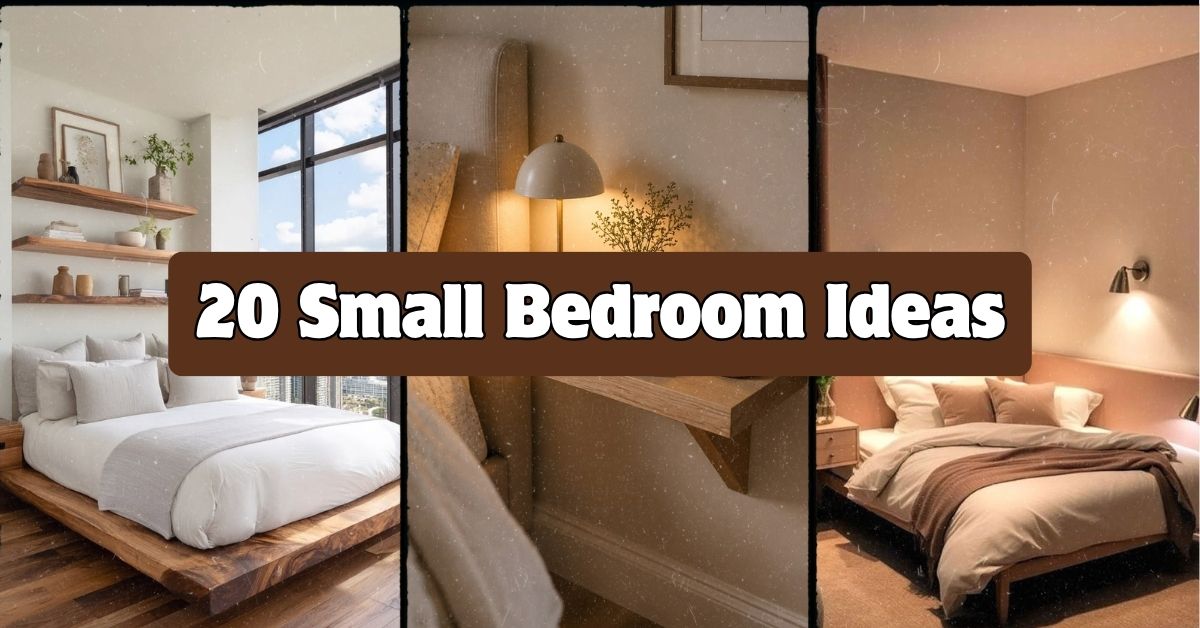
I’ve tested and researched 20 small bedroom ideas so you don’t have to guess what actually works when your square footage is tight. If you’ve ever stood in your cramped bedroom wondering why it feels like a storage closet instead of a place to relax, you’re not alone. This guide pulls together real, practical fixes that make small rooms feel bigger, calmer, and way more livable.
A small bedroom is any sleeping space under roughly 120 square feet where furniture, storage, and movement compete for the same limited area. The fix involves smart furniture choices, strategic color use, and layout tricks that create visual space without adding square footage.
Stick around, because I’m about to walk you through everything from bed placement tricks to lighting hacks that make a huge difference. By the end, you’ll have a full list of ideas ready to try tonight.
What Makes Small Bedroom Design Different
Small bedroom design isn’t just regular decorating shrunk down. It’s a whole different game. Every single item you bring into the room has to earn its spot. There’s no room for “maybe I’ll use this someday” furniture or decor that just sits there looking pretty.
I think of small bedrooms like a puzzle. Each piece needs to fit perfectly, or the whole picture falls apart. The good news? Limited space actually forces better decisions. You can’t overbuy furniture. You can’t clutter every surface. That constraint, weirdly, leads to cleaner, more intentional rooms once you know the right moves.
1. Choose a Platform Bed Instead of a Bulky Frame

Platform beds sit low to the ground and skip the boxy frame that eats up visual space. They usually don’t need a box spring either, which means less bulk overall. Look for a platform bed with built-in drawers underneath if you want extra storage without buying a separate dresser.
Practical tip: Measure your room and leave at least 24 inches of walking space on at least one side of the bed. Anything tighter feels cramped every time you get in and out.
This style works great in modern and minimalist rooms, but you can find wood-toned platform beds that fit traditional or coastal looks too. Once your bed is sorted, the next big decision is where to actually put it.
2. Push the Bed Into a Corner to Free Up Floor Space
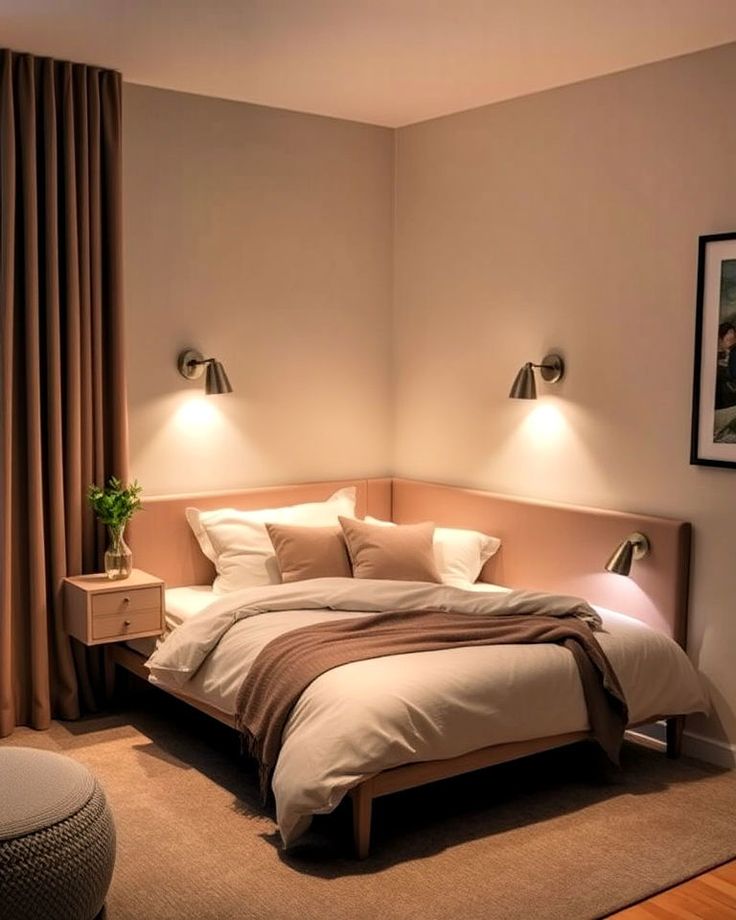
Instead of centering your bed against one wall, try tucking it into a corner. This single move can open up a surprising amount of usable floor space. You lose access on one side, sure, but you gain room for a dresser, chair, or walking path on the other side.
I’ve seen this work especially well in rooms shaped like rectangles or squares under 100 square feet. Pair the corner placement with a fitted sheet and a slim nightstand that matches the wall color so it visually disappears.
This trick fits almost any style, from farmhouse to modern, since it’s about function rather than a specific look. Now let’s talk about what goes above and around that bed.
3. Add Floating Shelves Instead of a Nightstand

Floor space is precious, so skip the traditional nightstand and mount floating shelves next to your bed instead. They hold your lamp, phone, and book without taking up any floor room at all. You can stack two or three shelves at different heights for extra storage.
Actionable tip: Install shelves at 24 to 30 inches above your mattress height, so they’re reachable but don’t feel like they’re hovering over your face.
For a coastal vibe, use light wood shelves. For industrial style, go with black metal brackets and reclaimed wood. This shelf trick pairs perfectly with smart lighting choices, which is exactly where we’re headed next.
4. Install Wall-Mounted Sconces to Free Up Surface Space
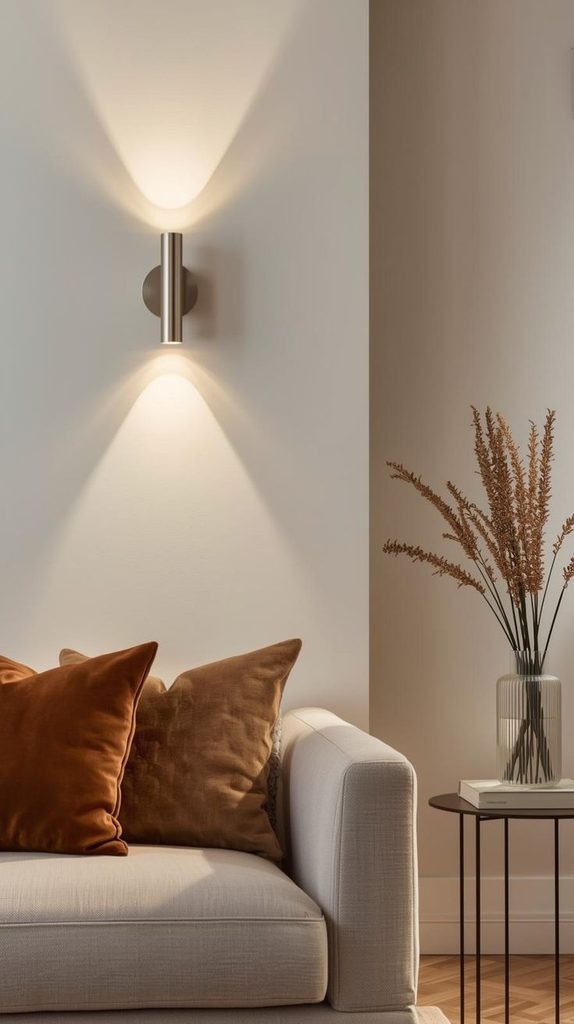
Table lamps take up nightstand space you don’t have. Wall-mounted sconces solve this by putting your light source on the wall instead. They free up every inch of your nightstand or shelf for other essentials like a glass of water or your glasses.
Look for sconces with swing arms so you can adjust the light direction for reading. Hardwired versions look cleaner, but plug-in sconces with a cord cover are way easier to install yourself.
Brass sconces suit traditional and glam rooms, while matte black fits modern and industrial spaces. Lighting sets the mood, but color does even more heavy lifting in a small room, which brings me to my next point.
Small Bedroom Color Palette Guide
| Style Goal | Wall Color | Trim/Accent | Best For |
|---|---|---|---|
| Maximize brightness | Soft white (Behr Polar Bear) | Light gray | Rooms with little natural light |
| Cozy but airy | Warm beige (Sherwin Williams Accessible Beige) | Cream | North-facing rooms |
| Modern calm | Sage green (Benjamin Moore Saybrook Sage) | White | Rooms with wood furniture |
| Bold but small-friendly | Deep navy on one wall only | White ceiling | Rooms with high ceilings |
5. Paint the Ceiling One Shade Lighter Than the Walls

This trick tricks your eye into thinking the room is taller than it actually is. Paint your walls a color, then go one or two shades lighter on the ceiling using the same color family. It creates a subtle gradient that draws the eye upward instead of boxing you in.
Practical tip: Ask your paint store for the same color chip but request the next lightest shade on the strip. This keeps everything cohesive instead of clashing.
This works in basically every design style since it’s a technique, not a look. Traditional rooms, modern rooms, even farmhouse spaces all benefit from this ceiling trick. Once your walls and ceiling are sorted, mirrors are your next best friend.
6. Lean a Large Mirror Against the Wall Instead of Hanging Small Ones
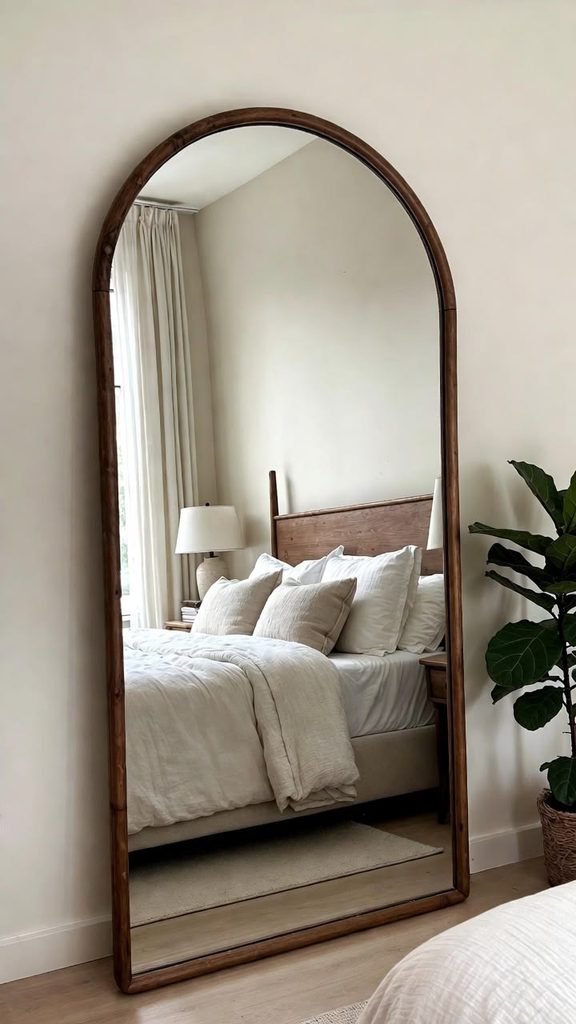
A big leaning mirror reflects more light and makes the whole room feel doubled in size. Skip the gallery wall of small mirrors and go with one oversized piece instead, propped against the wall or leaning in a corner.
I like placing the mirror across from a window so it bounces natural light around the room during the day. At night, it reflects lamp light too, making the space feel warmer.
Arched mirrors fit boho and coastal rooms, while rectangular ones with thin black frames suit modern spaces. Once you’ve got light bouncing around, it’s time to think vertically with your storage.
7. Use Vertical Storage Instead of Wide Dressers
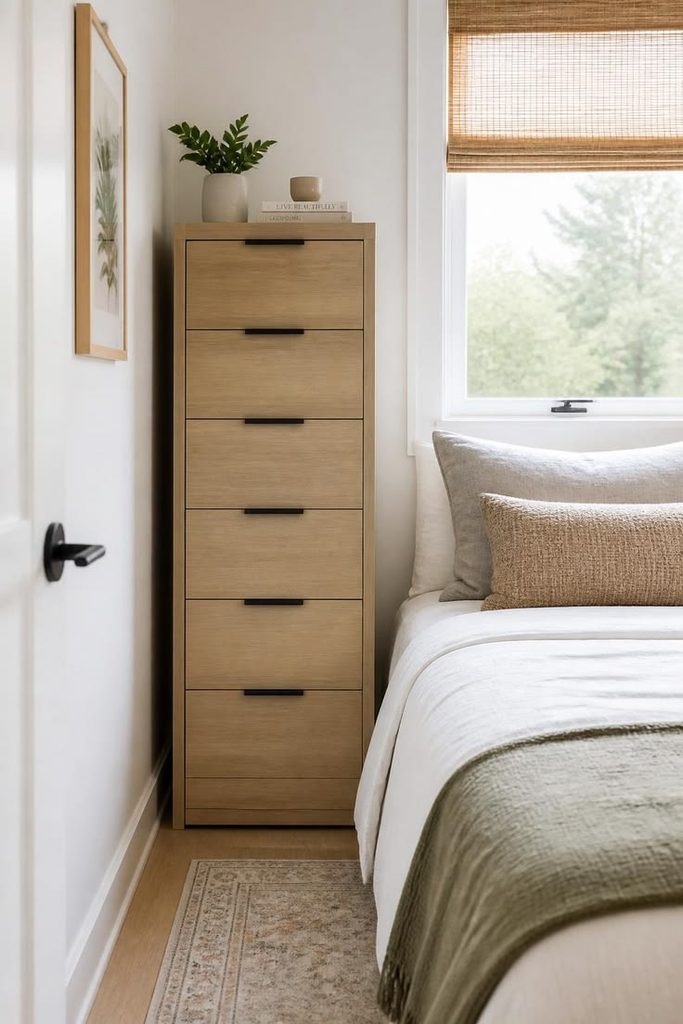
Wide dressers eat up wall space fast. Swap yours for a tall, narrow storage piece instead, something that goes up rather than out. A six-drawer tall dresser takes up half the floor space of a standard wide one while holding just as much.
Actionable tip: Measure your wall width before shopping and look specifically for dressers under 36 inches wide. Anything wider will crowd a small room fast.
Tall dressers with clean lines fit modern and Scandinavian styles, while ones with turned legs suit traditional rooms. Storage solves clutter, but window treatments solve something else entirely, light control and privacy.
8. Hang Curtains Higher Than the Window Frame

Mounting your curtain rod six to eight inches above the actual window frame makes the ceiling feel taller and the window feel bigger. This is one of those tricks that costs nothing extra but changes the whole feel of a room.
I always tell people to buy curtains slightly longer than they think they need. Curtains that pool slightly or hit exactly at the floor look far more intentional than ones that stop short.
Sheer curtains fit airy coastal or modern rooms, while heavier linen or velvet suits traditional and cozy cottage styles. Speaking of cozy, let’s talk about layering textiles without overcrowding the room.
9. Layer a Textured Throw Blanket Instead of a Heavy Comforter

Bulky comforters can visually swallow a small bed and make the whole room feel heavier. Swap yours for a lighter quilt or duvet, then add one textured throw blanket folded at the foot of the bed. This keeps things cozy without adding visual weight.
Practical tip: Choose a throw in a contrasting texture, like chunky knit against a smooth duvet, to add interest without adding clutter.
Knit throws fit farmhouse and cottage styles, while faux fur suits glam rooms, and waffle-weave cotton works for modern minimalist spaces. Textiles matter, but so does what’s happening on your walls.
10. Choose One Large Piece of Art Instead of Several Small Frames

A gallery wall of ten small frames can make a small bedroom feel busy and chopped up. Instead, pick one large piece of art, something at least 24×36 inches, and let it be the single focal point above your bed or dresser.
I’ve found that one bold piece actually makes a room feel more spacious than a bunch of tiny ones, because your eye has one place to rest instead of jumping around.
Abstract art fits modern rooms, botanical prints suit traditional and coastal spaces, and black-and-white photography works almost everywhere. Now that your walls are settled, let’s shrink down your seating situation.
11. Swap a Full Armchair for a Slipper Chair or Pouf

If you love having a reading nook but don’t have room for a bulky armchair, downsize to a slipper chair or a floor pouf instead. Slipper chairs have no arms, which shaves off several inches of width, and poufs can double as a footrest or extra seat when guests visit.
Actionable tip: Choose a pouf with a removable cover so you can wash it or swap the color when you redecorate.
Leather poufs suit modern and industrial rooms, while woven rattan ones fit boho and coastal styles. Once seating is sorted, let’s tackle one of the trickiest small bedroom problems, the closet.
12. Replace Closet Doors With a Curtain Panel

Swinging closet doors need clearance space to open, which is a luxury small rooms don’t have. Remove them entirely and hang a simple curtain panel on a tension rod instead. This saves the floor space the door would have swung into and adds a soft textile element to the room.
I recommend choosing a curtain that matches or complements your window treatments so the room feels pulled together instead of mismatched.
This works in basically any style, though boho and eclectic rooms can go bolder with pattern here since it’s a low-commitment swap. Now, let’s talk about a piece of furniture that does double duty.
Furniture Size Guide for Small Bedrooms
| Furniture Piece | Max Width for Rooms Under 100 sq ft | Alternative If Too Big |
|---|---|---|
| Bed frame | Twin XL or Full | Platform bed with no frame |
| Dresser | 32-36 inches | Tall 4-6 drawer chest |
| Nightstand | 12-16 inches | Floating shelf |
| Armchair | 28 inches | Slipper chair or pouf |
| Desk | 36 inches | Wall-mounted fold-down desk |
13. Install a Fold-Down Wall Desk for Work-From-Home Needs
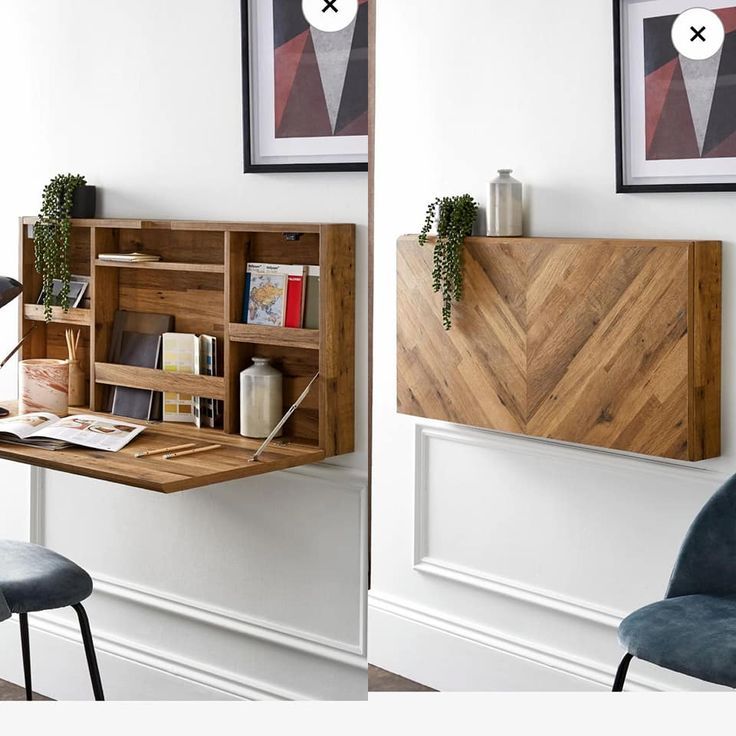
If you need a workspace but don’t have room for a permanent desk, a fold-down wall-mounted desk is the answer. It folds flat against the wall when you’re not using it and drops down into a full desk surface when you need to work.
Practical tip: Mount it near an outlet so you’re not running cords across the room, and pair it with a stool that slides underneath when not in use.
Wood-toned fold-down desks suit Scandinavian and farmhouse rooms, while a black metal version fits modern or industrial spaces. Once your workspace is handled, let’s look at the floor itself.
14. Use a Round Rug to Break Up Sharp Corners

Small rooms tend to have a lot of straight lines and hard angles, from the bed frame to the dresser to the door. A round rug softens all that visually. Place it half under the bed so it peeks out on both sides, creating a soft anchor point in the room.
I like round rugs in the 5-foot diameter range for rooms under 120 square feet. Anything bigger starts to overwhelm the space.
Jute round rugs fit coastal and boho rooms, while a plush round rug in cream suits modern and glam spaces. Rugs ground a room, but mirrors placed strategically can stretch it even further.
15. Position a Mirror Directly Across From Your Bedroom Door

When you place a mirror across from the entrance, it reflects the hallway or adjoining space, making your bedroom feel like it extends beyond its actual walls. This is a favorite trick of mine because it’s basically free once you already own a mirror.
Actionable tip: Test a few spots before committing to a hanging spot. Even six inches of difference changes what gets reflected.
This works in every style since placement matters more than the mirror’s frame design here. Now, let’s shrink your color story down to something that actually works in tiny spaces.
16. Stick to a Two-Color Palette Maximum

Small rooms get visually noisy fast when you introduce too many colors. Pick one main wall color and one accent color, then stick to those two throughout your bedding, curtains, and decor. This creates a calm, cohesive look instead of a busy one.
I always suggest testing your two colors on a small swatch board before committing, since lighting changes how colors look throughout the day.
Neutral-plus-one-accent works for modern and Scandinavian rooms, while warm-plus-warm combos (like terracotta and cream) suit boho and southwestern styles. Once your palette is locked, let’s talk about a bed accessory that changes everything.
17. Add a Bed Skirt to Hide Under-Bed Storage

If you’re storing bins or boxes under your bed, a bed skirt keeps that storage out of sight while adding a soft, finished look to the whole setup. This is especially useful in small rooms where under-bed storage isn’t optional, it’s essential.
Practical tip: Measure from the top of your box spring to the floor before ordering, since bed skirts come in specific drop lengths and an ill-fitting one looks sloppy.
Tailored bed skirts suit traditional and modern rooms, while a ruffled version fits cottage and farmhouse styles. Storage handled, let’s move to something people often forget entirely, the back of the door.
18. Use an Over-the-Door Organizer for Small Items

The back of your bedroom door is wasted space in most homes. An over-the-door organizer with pockets or hooks can hold shoes, accessories, or even folded clothes without taking up any room elsewhere. It’s one of the easiest wins on this whole list.
I’ve used these for everything from jewelry to workout clothes, and it genuinely changes how much clutter sits on visible surfaces.
Canvas organizers fit farmhouse and cottage rooms, while a sleek acrylic version suits modern spaces. Once your door is working for you, think about what’s happening near the window.
19. Choose a Window Seat With Built-In Storage Instead of a Bench

If your small bedroom has a window nook, skip the decorative bench and go with a window seat that has a lift-up lid or drawers underneath. You get seating and hidden storage in the exact same footprint, which is exactly what small rooms need.
Actionable tip: Add two or three cushions in a size that fits the seat exactly, so nothing looks bulky or mismatched.
Built-in window seats suit traditional and coastal rooms best, but you can find simplified versions that work for modern spaces too. Last but not least, let’s talk about the psychological trick of keeping things low.
20. Keep Furniture Height Low and Consistent Throughout

When your bed, dresser, and nightstand are all roughly the same height, the room feels more open because your eye doesn’t jump up and down between different levels. Aim for pieces that sit within a few inches of each other in height.
I’ve noticed this matters more than people expect. A tall dresser next to a low platform bed can make a small room feel choppy and disorganized, even if everything else is perfect.
This principle works across every design style since it’s about proportion, not aesthetics. With all twenty ideas in mind, let’s wrap up with some quick tips to keep you on track.
Tips for Success
- Measure everything twice before buying furniture. A few inches off can ruin your whole layout plan.
- Start with the bed placement first, since every other decision depends on where it sits.
- Buy multi-purpose furniture whenever possible, like a storage ottoman or a bed with built-in drawers.
- Keep a “one in, one out” rule for decor items so clutter doesn’t creep back in over time.
- Test paint colors on the actual wall at different times of day before committing to a full room.
- Don’t skip window treatments, even in tiny rooms, since they add softness and control light.
- Walk through your room’s traffic path before finalizing furniture placement to avoid tight squeezes.
Common Mistakes and How to Avoid Them
Buying furniture too large for the room
: Always measure your room and leave walking space before shopping. Bring a tape measure to the store if needed.
Overcrowding walls with too much art or shelving
: Pick one focal point per wall instead of covering every inch with frames or shelves.
Choosing dark, heavy colors on every wall
: Stick to light or mid-tone colors on at least three walls, and save darker shades for one accent wall if you want drama.
Ignoring vertical space
: Use tall dressers, floating shelves, and wall-mounted lighting to keep the floor clear and draw the eye upward.
Skipping a rug because the room feels too small
: A properly sized rug actually grounds the room and makes it feel more finished, not smaller.
Forgetting about traffic flow
: Walk through your planned layout before buying anything permanent, since tight paths make a room feel more cramped than it is.
Similar Variations
- Small Nursery Ideas: Applies similar space-saving furniture tricks to baby rooms, focusing on convertible cribs and wall storage.
- Studio Apartment Bedroom Zones: Uses room dividers and furniture placement to carve out a sleeping area within a larger open space.
- Tiny Guest Room Design: Focuses on multi-purpose furniture like daybeds and fold-out desks for rooms that serve double duty.
- Small Kids Bedroom Ideas: Prioritizes bunk beds, under-bed storage, and wall-mounted organization for shared or compact kid spaces.
- Compact Home Office Bedroom Combo: Blends fold-down desks and closet conversions to fit work and sleep into one small room.
Putting even five or six of these changes into your room can completely shift how it feels day to day. Small bedrooms don’t have to feel cramped or chaotic once you know which furniture, colors, and layout tricks actually make a difference. I hope this list of 20 small bedroom ideas gives you a clear starting point for turning your tight space into a room you actually enjoy spending time in.
Leave a Reply