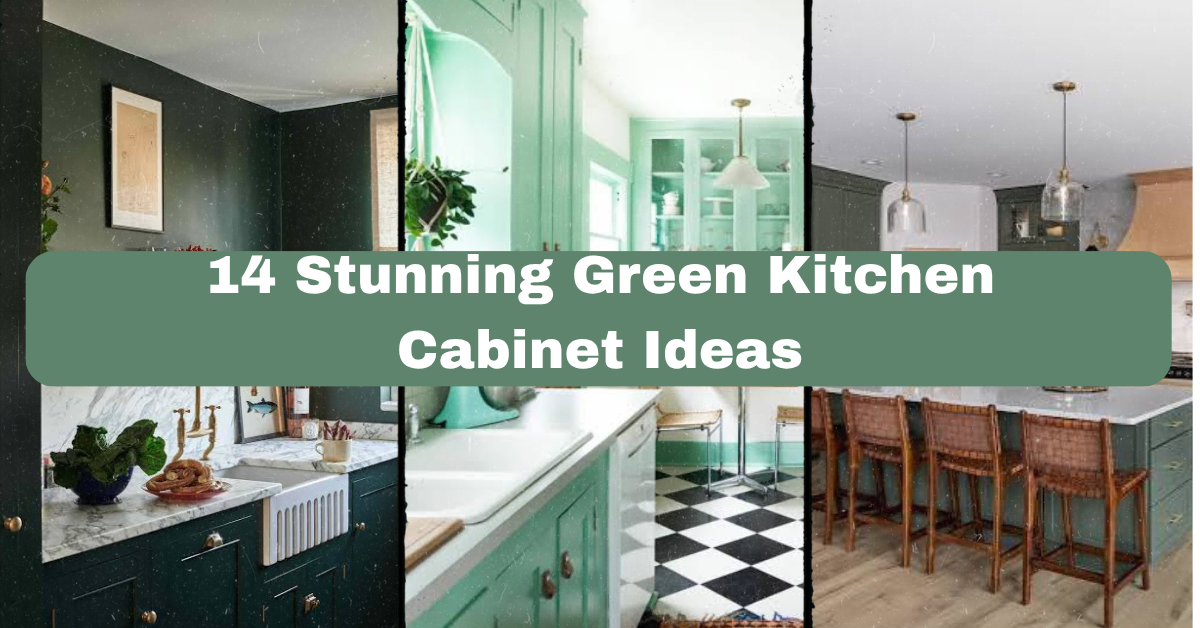
I’ve spent way too many hours scrolling through kitchen photos, and I can tell you right now that 14 stunning green kitchen cabinet ideas are exactly what you need if you’re stuck staring at boring white cabinets wondering what’s missing. Green has quietly become the go-to color for anyone who wants a kitchen that feels fresh, warm, and a little different from everyone else’s.
Green kitchen cabinets refer to painted or stained cabinetry in shades ranging from sage and olive to forest and emerald, used as the main color scheme in a kitchen. This color choice pairs naturally with wood, brass, and stone, offering a warm alternative to white or gray cabinets while still feeling neutral enough to age well over time.
Stick around, because I’m about to walk you through more green cabinet looks than you’ll know what to do with, plus real tips on making each one work in your own home.
What Makes Green Kitchen Cabinets So Popular Right Now
Okay, so here’s the thing about green. It’s not just a trend that showed up out of nowhere. Green sits right between the calm of blue and the earthiness of brown, which makes it feel grounded without being boring. I think that’s why designers keep reaching for it.
It also plays nice with almost every material you’d want in a kitchen. Wood floors? Green loves them. Brass hardware? Even better. White marble countertops? Chef’s kiss. Whether your house leans modern, farmhouse, or traditional, there’s a green shade that fits. That flexibility is honestly the whole reason this color took off.
1. Sage Green Shaker Cabinets for a Timeless Look
Sage green is soft, muted, and honestly kind of impossible to mess up. Shaker-style doors keep things simple with their clean lines and recessed panel, so the color does most of the talking. This combo works because sage doesn’t compete with your countertops or backsplash, it just blends right in like it’s always been there.
Pair it with brushed nickel or matte black hardware for a look that won’t feel dated in five years. My tip: test the paint on a cabinet door in different lighting before committing, because sage can look gray in shadow and green in sunlight.
This style adapts beautifully to farmhouse kitchens, but it also holds its own in a modern minimalist space. Now let’s talk about a deeper shade that brings a lot more drama.
2. Deep Forest Green for a Moody, Rich Kitchen
If sage feels too safe, forest green brings the intensity. This color turns your kitchen into a statement room instantly. It works best on full cabinet sets, not just an island, because a little forest green can look patchy while a lot of it feels intentional and luxurious.
Balance the darkness with light countertops, think white quartz or light marble, so the kitchen doesn’t feel like a cave. Gold or brass fixtures add a warm glow against the deep color. Actionable tip: add under-cabinet lighting, since dark cabinets can make a kitchen feel dim without it.
Forest green suits traditional and transitional kitchens especially well. Next up is a lighter, brighter cousin of green that works in almost any small space.
3. Mint Green Cabinets for a Retro-Inspired Kitchen
Mint green cabinets pull straight from that 1950s diner vibe, but done right, they feel fresh instead of costume-y. This shade works great in smaller kitchens because it’s light enough to keep things airy while still bringing personality.
Stick to simple hardware, like chrome pulls, to keep the retro theme consistent without going overboard. White subway tile backsplashes are a classic pairing here. Tip: keep your appliances stainless steel or white so the mint doesn’t clash with too many competing colors.
This look is perfect for cottage-style or eclectic kitchens, but it can feel out of place in a strict modern build. Let’s move on to how green pairs with one of the most requested kitchen materials right now.
Popular Green Shades and Their Best Pairings
| Green Shade | Best Countertop Pairing | Best Hardware Finish | Ideal Kitchen Style |
|---|---|---|---|
| Sage Green | White quartz | Brushed nickel | Farmhouse, modern |
| Forest Green | White marble | Brass or gold | Traditional |
| Mint Green | Butcher block | Chrome | Retro, cottage |
| Olive Green | Concrete | Matte black | Industrial |
| Emerald Green | Black granite | Gold | Glam, contemporary |
4. Olive Green Cabinets Paired with Wood Accents
Olive green sits close to brown on the color wheel, which is exactly why it pairs so well with natural wood. Think wood open shelving, a butcher block island, or even a wood ceiling beam. The earthy combo feels grounded and calm, like your kitchen belongs outside somehow.
Keep your wall color neutral, like a warm white or beige, so olive doesn’t fight for attention. My tip here: add greenery, like a few potted herbs on the windowsill, to tie the whole earthy theme together without trying too hard.
This pairing shines in Scandinavian and farmhouse kitchens but can also work in a boho space. Speaking of boho, let’s talk about how green cabinets look with patterned tile.
5. Green Cabinets with Patterned Backsplash Tile
Green cabinets give you a strong, solid base color, which means you can go a little wild with your backsplash. Moroccan-style tiles, geometric patterns, or even hand-painted tiles all pop beautifully against a green backdrop.
Keep the pattern colors limited to two or three shades so it doesn’t overwhelm the kitchen. White grout keeps things clean looking. Tip: choose a backsplash tile that repeats one of your cabinet’s undertones, like blue or yellow, so the whole room feels connected instead of random.
This idea works especially well in Mediterranean, eclectic, or boho kitchens. Next, let’s look at a two-tone approach that’s taking over kitchen design boards everywhere.
6. Two-Tone Kitchens with Green Lower Cabinets
Two-tone kitchens are having a real moment, and green on the bottom with white or wood on top is one of the most popular combos out there. It grounds the kitchen visually while keeping the upper half light and open.
This works because our eyes naturally read darker colors as “heavier,” so putting green low and light colors high keeps the room from feeling top-heavy. Tip: use the same hardware finish on both cabinet colors so the kitchen doesn’t feel like two separate design decisions.
Two-tone green kitchens fit modern, transitional, and even coastal styles depending on the shade you pick. Now, let’s talk islands, because they deserve their own spotlight.
7. A Green Island as the Kitchen’s Centerpiece
Sometimes you don’t want green everywhere, you just want one big statement piece. A green island does exactly that. Keep your perimeter cabinets white, cream, or wood, and let the island be the star of the show.
This is a great low-commitment way to try green without repainting your whole kitchen. Tip: pick a slightly bolder shade for the island than you think you want, since it’s a smaller surface area and can handle more color intensity.
Green islands work in nearly every kitchen style, from farmhouse to modern to traditional. Let’s shift gears and look at how green plays with metal finishes.
8. Emerald Green Cabinets with Gold Hardware
Emerald green is bold, jewel-toned, and instantly feels a little fancy. Pairing it with gold or brass hardware amplifies that luxurious feeling even more. This combo says “I put thought into this kitchen” without saying a word.
Balance the richness with plenty of white or light gray in your countertops and walls. Tip: add a statement light fixture in brass or gold above your island to tie the metals together throughout the room.
This pairing is a natural fit for glam, contemporary, and art deco inspired kitchens. Next, let’s look at a softer, more textured take on green cabinetry.
9. Textured Green Cabinets with a Matte Finish
Matte finishes have taken over from glossy cabinets, and green looks incredible in matte. It softens the color, making even bold shades feel more approachable and less shiny showroom.
Matte finishes also hide fingerprints and smudges better than gloss, which matters a lot if you’ve got kids or just cook a lot. Tip: ask your painter or cabinet maker specifically for a matte or eggshell finish, since satin can still catch light in a way that looks glossy in photos.
This works across almost every style, but it’s especially loved in modern farmhouse and minimalist kitchens. Now, let’s talk about a fun way to bring green in without full commitment.
10. Green Cabinets on Just the Upper Units
Flip the two-tone idea and put green up top instead of down low. This works surprisingly well because it draws the eye upward and can make ceilings feel taller. Keep your lower cabinets in white, wood, or a neutral tone to balance things out.
This is a smart choice for kitchens with limited natural light, since darker lower cabinets can sometimes feel heavy in a dim room. Tip: pair upper green cabinets with open shelving on one section to break up the color and add visual interest.
This layout fits modern and Scandinavian kitchens especially well. Coming up, let’s look at how green works with black accents for extra drama.
11. Green and Black Cabinet Combinations
Green and black together create serious contrast and depth. This isn’t a shy design choice, it’s for people who want their kitchen to feel a little edgy and modern. Usually this means green on most cabinets with black accents on an island, open shelves, or trim.
Keep your lighting bright since two dark colors together can swallow light fast. Tip: add a lot of texture through wood or stone to keep the space from feeling flat or too matchy.
This combo leans hard into modern and industrial kitchen styles. Next, let’s slow things down with a softer pastel option.
12. Pastel Green Cabinets for a Soft, Airy Feel
Pastel green is barely-there color, more of a whisper than a statement. It’s perfect for anyone who wants some personality without a bold commitment. This shade works beautifully in kitchens with lots of natural light, since the softness really shines in daylight.
Pair pastel green with white countertops and light wood floors for a Scandinavian feel. Tip: avoid pairing pastel green with other pastel colors in the same room, since it can start to feel like an Easter egg instead of a designed space.
Pastel green fits cottage, coastal, and Scandinavian kitchens perfectly. Now let’s check out a combo that’s all about natural materials.
Budget Guide for Painting or Replacing Cabinets
| Budget Tier | What You Get | Estimated Cost Range |
|---|---|---|
| Low | DIY paint job on existing cabinets | $200 to $600 |
| Mid | Professional paint job, same cabinets | $1,500 to $4,000 |
| High | New shaker-style green cabinets, mid-grade | $8,000 to $15,000 |
| Premium | Custom cabinetry, high-end finish | $20,000 and up |
13. Green Cabinets with Natural Stone Countertops
Stone countertops, especially ones with movement like marble or soapstone, bring out the best in green cabinets. The natural veining in the stone plays off the organic feel of green, making the whole kitchen feel like it was pulled from nature.
Soapstone in particular pairs beautifully with darker greens since both have that moody, earthy quality. Tip: bring a cabinet door sample with you when picking out stone slabs, since lighting in a stone yard is very different from your kitchen.
This pairing suits traditional, farmhouse, and even some modern kitchens depending on the stone pattern chosen. Let’s wrap up the ideas with one more that’s great for renters or commitment-phobes.
14. Green Cabinet Hardware and Accents Only
Not ready to paint your whole kitchen? Start small with green accents instead. Think green cabinet knobs, a green trash can, green dish towels, or even a green rug. This lets you test the waters before going all in on painted cabinets.
It’s a smart move for renters who can’t paint permanently anyway. Tip: choose one or two green accessories max at first, then add more slowly so it doesn’t feel like you’re just throwing color at the room.
This approach works in literally any kitchen style since it’s low commitment and easy to change. And that wraps up our big list of ways to bring green into your kitchen.
Tips for Success
- Always test paint samples on the actual cabinets, not just a wall, since cabinet material affects how color reads
- Stick to one dominant green shade per kitchen, then use accent colors sparingly to avoid visual chaos
- Consider your kitchen’s natural light before choosing a shade, north-facing kitchens often need warmer greens
- Don’t skip the primer step if painting over existing cabinets, it affects how long the paint job lasts
- Mix metal finishes carefully, too many different metals can make a green kitchen feel cluttered
- Live with paint samples for at least three days before committing, since lighting changes throughout the day
Common Mistakes and How to Avoid Them
Choosing a green shade without checking undertones
: Test the paint under both natural and artificial light before painting the whole kitchen, since some greens can look yellow or gray depending on the light source.
Pairing green with the wrong countertop color
: Stick to white, cream, black, or natural stone countertops, since overly colorful countertops can clash and make the kitchen feel busy.
Going too dark in a small, low-light kitchen
: Choose sage or mint instead of forest or emerald green if your kitchen doesn’t get much sunlight, since dark colors can make small spaces feel smaller.
Using too many green shades in one kitchen
: Pick one main shade and stick with it throughout the whole space, rather than mixing multiple greens on different cabinet sections.
Forgetting about hardware finish consistency
: Choose one or two metal finishes max and repeat them throughout the kitchen for a cohesive look.
Similar Variations
- Blue Kitchen Cabinets: A cooler alternative to green that offers the same non-white personality with a calmer, more subdued feel
- Navy and Wood Kitchens: Deep navy cabinets paired with warm wood accents for a cozy, upscale look
- Two-Tone White and Wood Kitchens: A neutral variation that skips bold color but still avoids an all-white kitchen
- Terracotta Accent Kitchens: Warm, earthy orange and rust tones used similarly to how green is used as a statement color
- Black and White Contrast Kitchens: A bold, high-contrast alternative for those who want drama without committing to color
So there you have it, more green kitchen ideas than you probably expected when you clicked on this article. The truth is, green works because it’s flexible, it’s calming, and it doesn’t scream for attention the way some trendy colors do. Whether you go bold with emerald and gold or keep it soft with sage and white, there’s a shade out there that’ll make your kitchen feel like yours. I hope this list of 14 stunning green kitchen cabinet ideas gave you exactly what you needed to start planning your own green kitchen makeover.
Leave a Reply