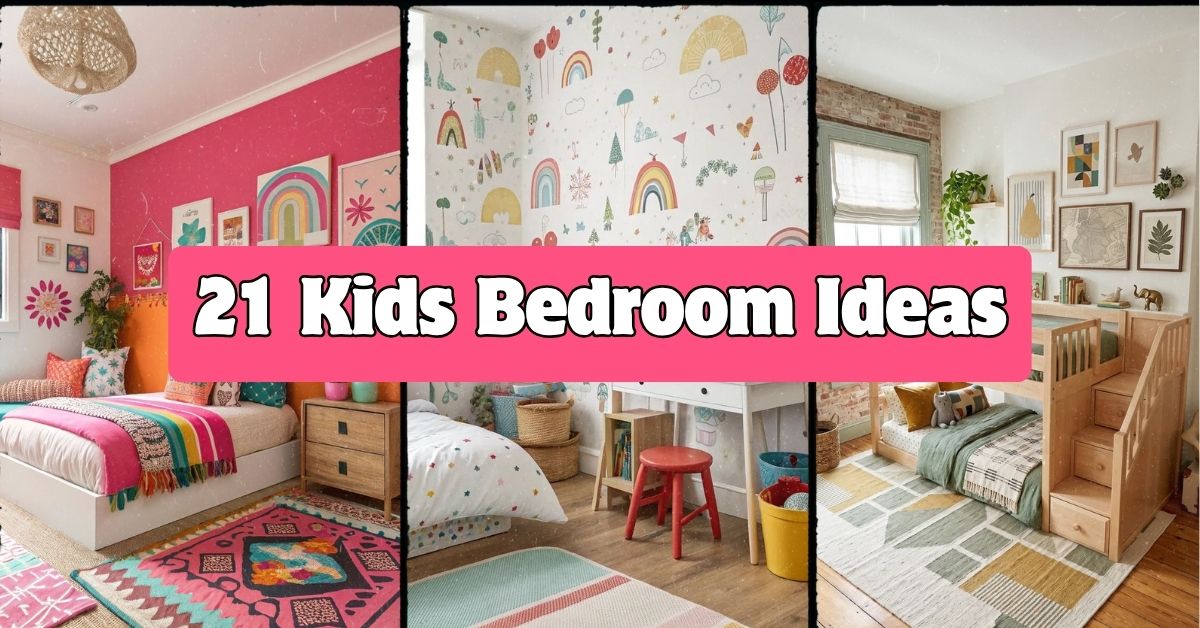
If you’re hunting for real, workable 21 kids bedroom ideas, you’ve landed in the right spot. I’ve dug through what actually works for parents, not just pretty pictures that fall apart once toys hit the floor.
Kids bedroom ideas refer to design choices, furniture picks, colors, and layouts that make a child’s room fun, functional, and safe. The best ones balance play space, storage, sleep comfort, and room to grow as the child ages.
Stick around, because I’m about to walk you through 22 ideas, real budget numbers, and the mistakes I see parents make over and over.
What Makes a Kids Bedroom Actually Work
Here’s the thing about kids’ rooms. They’re not just mini adult bedrooms with smaller furniture. They need to handle sleep, play, homework, and storage all in one space, often a pretty small one. A good kids bedroom grows with the child instead of getting torn apart every two years. It also needs to survive spilled juice, crayon marks, and the occasional indoor “fort building” project. I’ve found the rooms that work best mix something durable, something fun, and something the kid actually picked out themselves. That last part matters more than people think. Kids care about their space when they had a hand in shaping it.
1. Paint One Wall in a Bold Color for a Playful Accent

You don’t need to paint the whole room neon green. Just pick one wall. An accent wall in a bright color like teal, coral, or mustard yellow adds personality without overwhelming the space. It also makes it way easier to change the room’s mood later, since you’re only repainting one wall instead of four.
Practical tip: Use a washable, low-VOC paint so scuffs and marker mishaps wipe off easily.
This works in almost any style. Modern rooms like a single saturated color, while coastal rooms might use a soft ocean blue instead. Once that wall’s done, you’ll want furniture that doesn’t fight with it, which brings me to bunk beds.
2. Choose Bunk Beds to Save Floor Space for Play

Bunk beds aren’t just for siblings sharing a room. Even in a single-kid bedroom, a bunk bed frees up serious floor space underneath for a play area, desk, or reading corner. Wood frames tend to last longer and feel warmer, while metal frames are lighter and often cheaper.
Practical tip: Always check the weight limit and guardrail height before buying, especially for kids under six.
Traditional homes often go for wood bunks with turned posts, while modern spaces prefer clean metal frames with hidden hardware. Once you’ve got that extra floor space, a cozy nook is the perfect way to fill it.
3. Add a Reading Nook with Soft Cushions

A reading nook doesn’t need much. A corner, a soft rug, some oversized pillows, and maybe a small canopy or curtain to make it feel tucked away. Kids love having a spot that feels like theirs alone, separate from the bed and the play area.
Practical tip: Add a small clip-on lamp so the nook has its own light source without needing the overhead light on.
In a farmhouse-style room, use a wicker basket for books. In a modern room, swap that for a sleek floating shelf. Speaking of walls, let’s talk about changing them without any long-term commitment.
4. Use Removable Wallpaper for Easy Theme Changes

Kids change their minds fast. The dinosaur phase turns into a space phase turns into a “I only like purple now” phase. Removable wallpaper lets you keep up without repainting every six months. It peels off clean and won’t damage the wall underneath if you pick a quality brand.
Practical tip: Test a small patch on the wall first, since some paint finishes react differently to adhesive.
This idea works everywhere, from bohemian rooms with patterned prints to minimalist rooms with subtle textures. Once your walls have a theme, it’s time to make them personal with some real artwork.
5. Hang a Gallery Wall of Kids’ Own Artwork
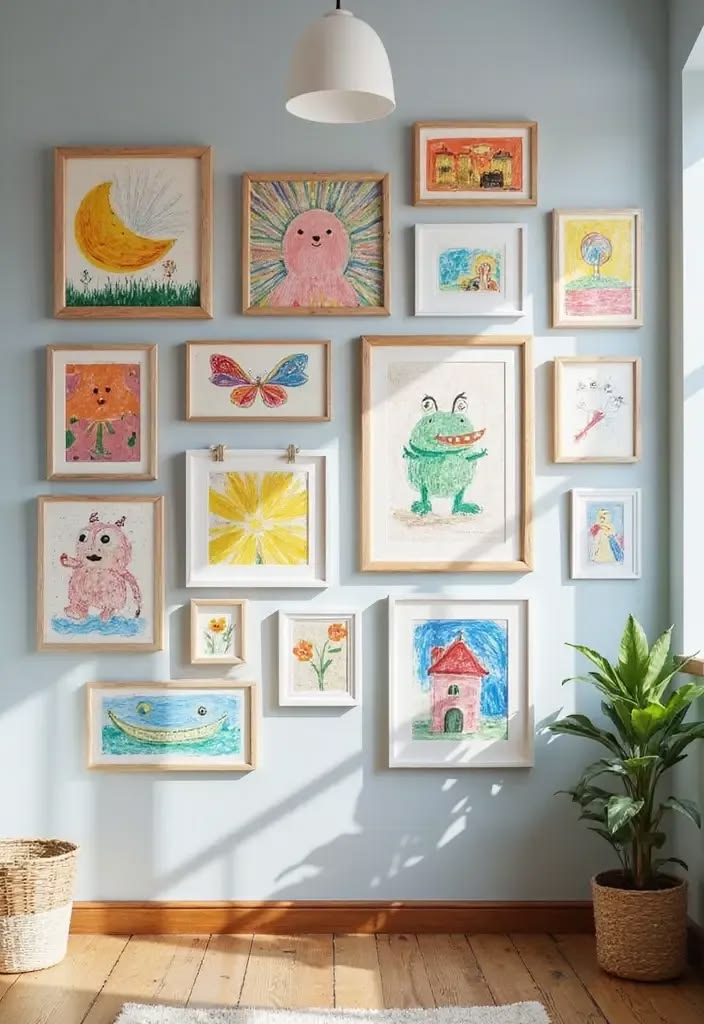
Skip the store-bought prints and frame your kid’s actual drawings instead. A gallery wall of their own art gives them pride in the room and costs almost nothing. Rotate the pieces every few months so it stays fresh.
Practical tip: Use simple matching frames so the wall looks intentional even though the art is wonderfully chaotic.
This idea fits any style since the frames do the styling work, not the art itself.
Popular Paint Color Palettes for Kids Rooms
| Palette Name | Wall Color | Accent Color | Best For |
|---|---|---|---|
| Ocean Breeze | Soft Blue | White | Coastal, calming rooms |
| Sunny Meadow | Pale Yellow | Sage Green | Nature themed rooms |
| Bold Explorer | Charcoal Gray | Bright Orange | Adventure or space themes |
| Sweet Blush | Blush Pink | Gold | Traditional, girly rooms |
| Cool Slate | Slate Blue | Mustard | Gender neutral modern rooms |
Once the walls and art are settled, the next big question is furniture that won’t need replacing every year.
6. Pick Multi-Functional Furniture That Grows with Them

A crib that converts into a toddler bed, or a desk that adjusts in height, saves you money long term. Look for furniture labeled as “convertible” or “adjustable.” It costs a bit more upfront but usually lasts through several stages of childhood.
Practical tip: Measure the room before buying, since convertible furniture often has a slightly larger footprint than basic pieces.
Traditional and modern styles both offer convertible lines now, so you’re not stuck picking one look. With furniture sorted, storage is the next piece of the puzzle.
7. Install Open Shelving for Toy Display and Access
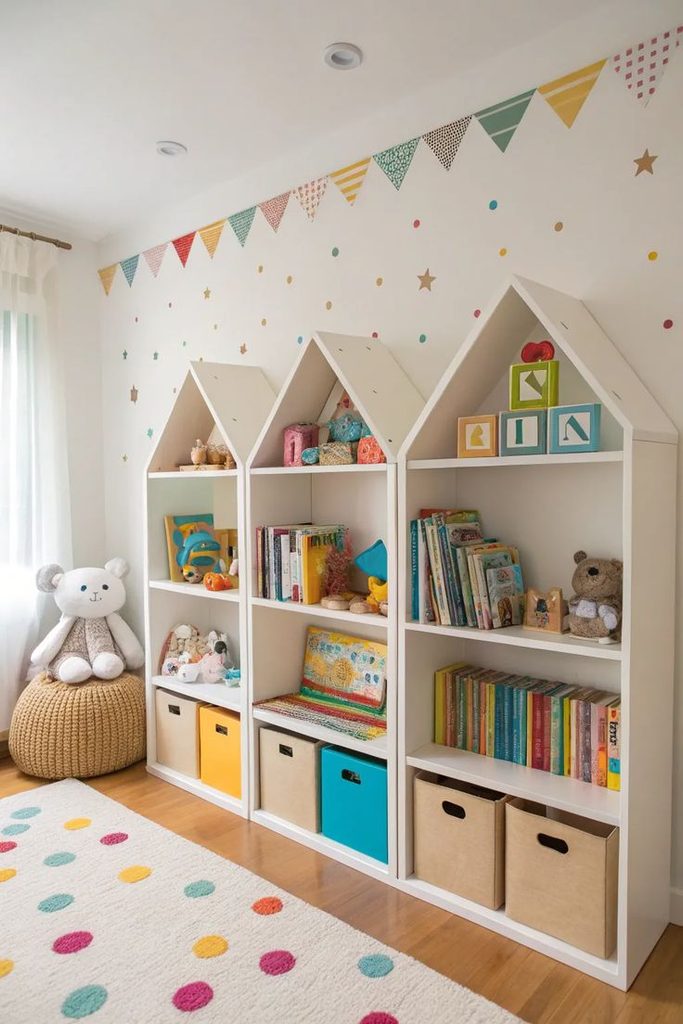
Open shelves let kids see their toys and books, which actually encourages them to put things away since everything has a visible spot. Keep shelves low enough for little hands to reach without climbing.
Practical tip: Anchor all shelving units to the wall with brackets. This isn’t optional with young kids around.
Farmhouse rooms often use raw wood shelves, while modern rooms prefer floating white ones. Once the shelves are up, a fun bed topper can make the whole room feel more magical.
8. Add a Canopy or Tent Over the Bed
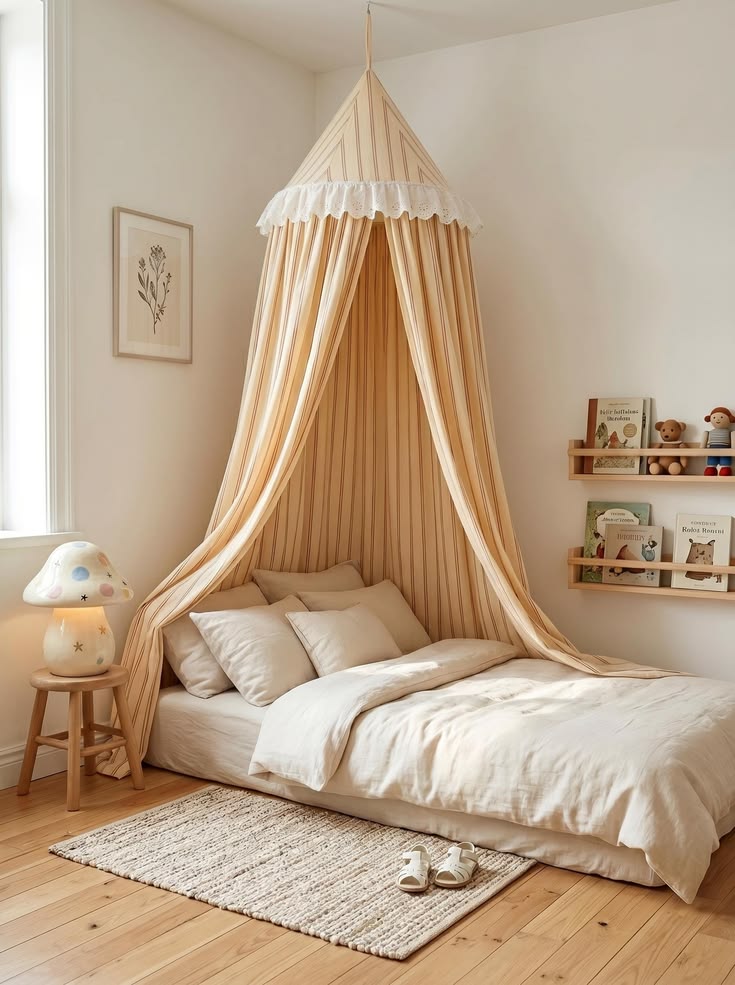
A canopy turns an ordinary bed into a little hideaway. Sheer fabric works for a dreamy look, while a pop-up tent style adds more of a fort feeling. Either way, it gives the bed a sense of its own space within the room.
Practical tip: Choose fire-retardant fabric, especially if there’s a nearby lamp or nightlight.
Boho rooms tend to use macrame-trimmed canopies, while modern rooms keep it simple with plain white fabric. Lighting pairs perfectly with this idea, so let’s get into that next.
9. Use Glow-in-the-Dark Stars or String Lights

String lights or glow stars on the ceiling turn bedtime into something kids actually look forward to. They’re cheap, they’re easy to install, and they double as a soft night light that’s less jarring than a full lamp.
Practical tip: Battery-operated string lights are safer than plug-in ones for younger kids who might pull cords.
This idea suits basically every style since string lights come in warm white, colored, or even shaped versions like stars or clouds.
Furniture Budget Tiers for Kids Bedrooms
| Tier | Bed Frame | Storage | Desk | Total Estimated Cost |
|---|---|---|---|---|
| Budget | $100-200 | $50-100 | $60-100 | $300-500 |
| Mid-Range | $250-450 | $100-250 | $120-200 | $600-900 |
| High-End | $500-900+ | $300-500 | $250-400+ | $1,200-1,800+ |
Knowing your budget tier helps before you fall in love with something way outside your range. Now let’s talk about a wall feature kids genuinely use every day.
10. Create a Chalkboard or Whiteboard Wall

A chalkboard section on one wall gives kids a spot to doodle, write their name, or leave notes for you. It’s way less permanent than crayon on the actual wall, and it’s endlessly reusable.
Practical tip: Frame the chalkboard section with painter’s tape before applying chalkboard paint so the edges stay crisp.
This works in playful modern rooms and even traditional ones if you frame it like a piece of art. Underfoot, a good rug pulls the whole room together.
11. Layer a Soft Area Rug for Floor Play
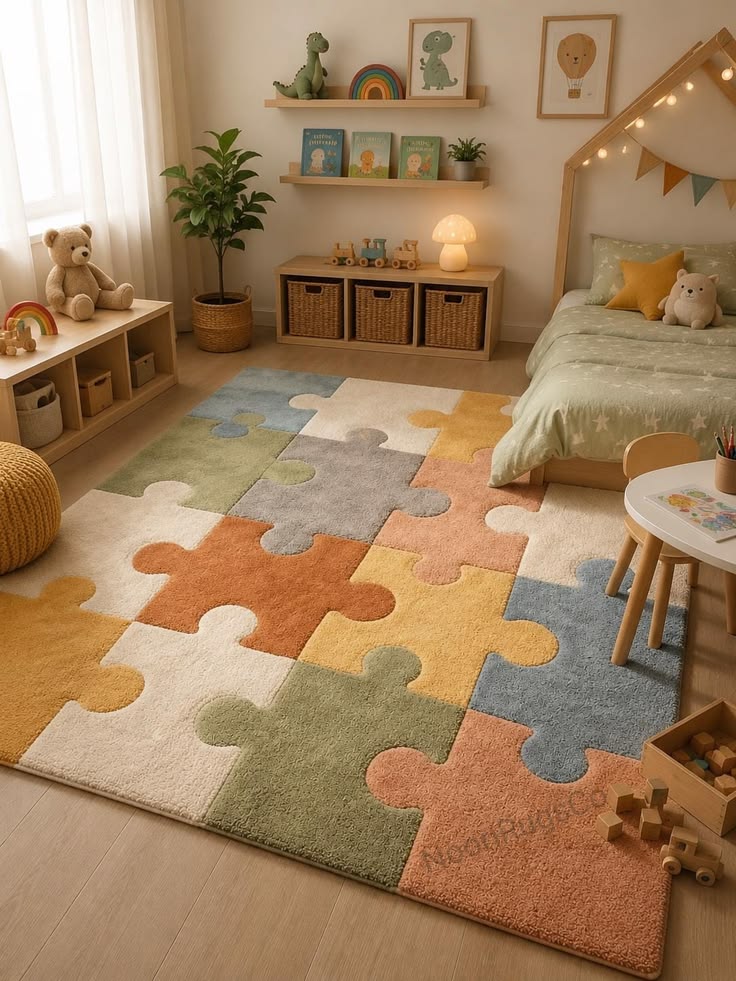
Kids spend a lot of time on the floor, so a thick, soft rug matters more than people realize. Look for stain-resistant materials since spills are inevitable. Round rugs work well in smaller rooms since they avoid sharp corners kids can bump into.
Practical tip: Add a non-slip pad underneath, even on carpet, to keep it from sliding during active play.
Coastal rooms lean toward jute or woven rugs, while modern rooms often go with simple geometric patterns.
12. Choose a Nature or Outdoor Theme
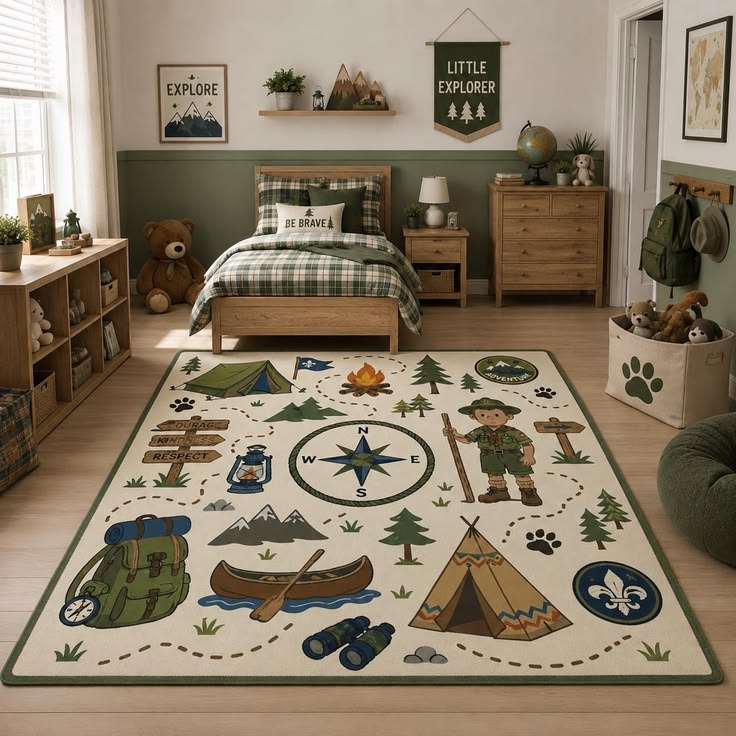
A nature theme, think trees, animals, or a soft green and brown palette, creates a calming space that doesn’t feel babyish too fast. It also ages well since nature themes aren’t tied to a specific trend that’ll feel dated in two years.
Practical tip: Use wall decals of trees or leaves instead of paint if you want an easy update later.
This theme naturally fits farmhouse and coastal homes, but even modern rooms can pull it off with a muted, minimal color palette.
13. Add a Small Table and Chairs for Crafts

A kid-sized table gives them a spot to draw, build with blocks, or do homework without taking over the whole room. Pick a table with a wipeable surface since markers and glue are a given.
Practical tip: Store craft supplies in a rolling cart nearby so cleanup takes seconds, not twenty minutes.
Traditional rooms use wood tables with matching chairs, while modern rooms often pick bright plastic or acrylic versions.
Room Size Guide for Kids Bedroom Layouts
| Room Size | Recommended Bed Type | Extra Furniture That Fits | Play Area Space |
|---|---|---|---|
| Small (under 100 sq ft) | Twin or Loft Bed | Desk or small shelf, not both | Minimal, use vertical storage |
| Medium (100-150 sq ft) | Twin or Full | Desk, dresser, small rug area | Moderate, rug plus table |
| Large (150+ sq ft) | Full or Bunk Beds | Desk, dresser, reading nook | Full play zone possible |
With the layout figured out, let’s dig into storage solutions that actually get used.
14. Use Storage Bins and Baskets for Toy Organization
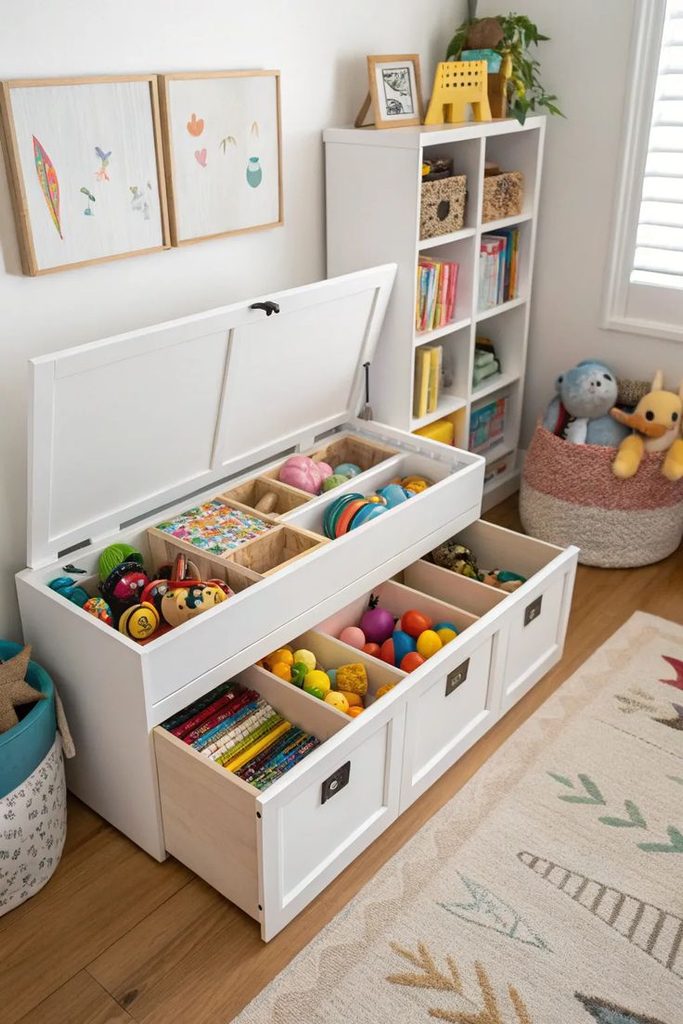
Labeled bins make cleanup a game instead of a chore. Clear bins help younger kids see what’s inside without opening every single one. Fabric baskets look softer and hide clutter better in shared spaces.
Practical tip: Use picture labels, not just text, for kids who can’t read yet.
Farmhouse rooms love woven baskets, while modern rooms prefer sleek plastic bins in solid colors. Once storage is sorted, walls can go from decorative to educational.
15. Hang a World Map or Educational Poster

A big map or poster isn’t just decoration, it sneaks in some learning too. Kids end up asking questions about countries or planets just from staring at it before bed. Choose one with bright colors so it doubles as wall art.
Practical tip: Laminate paper posters so they survive years of little hands pointing and touching.
This fits playful modern rooms especially well, though even traditional rooms can frame a map like classic art.
16. Add a Loft Bed with Desk Underneath

A loft bed lifts the sleeping area up and frees the ground floor for a desk, bookshelf, or seating. It’s one of the best space-saving moves for smaller rooms, especially once kids hit school age and need a homework spot.
Practical tip: Add a nightlight near the ladder so nighttime bathroom trips are safer.
Modern rooms often pick metal loft frames, while traditional rooms lean toward wood with built-in drawers.
17. Choose Curtains with Fun Patterns or Blackout Fabric

Curtains do double duty here. Fun patterns add personality, while blackout fabric helps kids actually sleep in, especially during summer when the sun rises early. You can even layer a sheer curtain under a patterned blackout one for both looks.
Practical tip: Cordless curtains are safer for younger kids’ rooms, since dangling cords are a real hazard.
Coastal rooms often use light, airy patterns, while space or adventure themed rooms go bold with prints like rockets or dinosaurs.
Flooring Material Comparison for Kids Rooms
| Material | Comfort | Durability | Easy to Clean | Best For |
|---|---|---|---|---|
| Carpet | High | Medium | Low | Toddlers, crawling age |
| Laminate | Medium | High | High | Active play, spills |
| Cork | High | Medium | Medium | Warmth plus sound dampening |
| Vinyl Plank | Medium | High | High | High traffic, allergy concerns |
Flooring sets the tone for everything else in the room, including the ceiling above it.
18. Create a Space-Themed Ceiling Mural
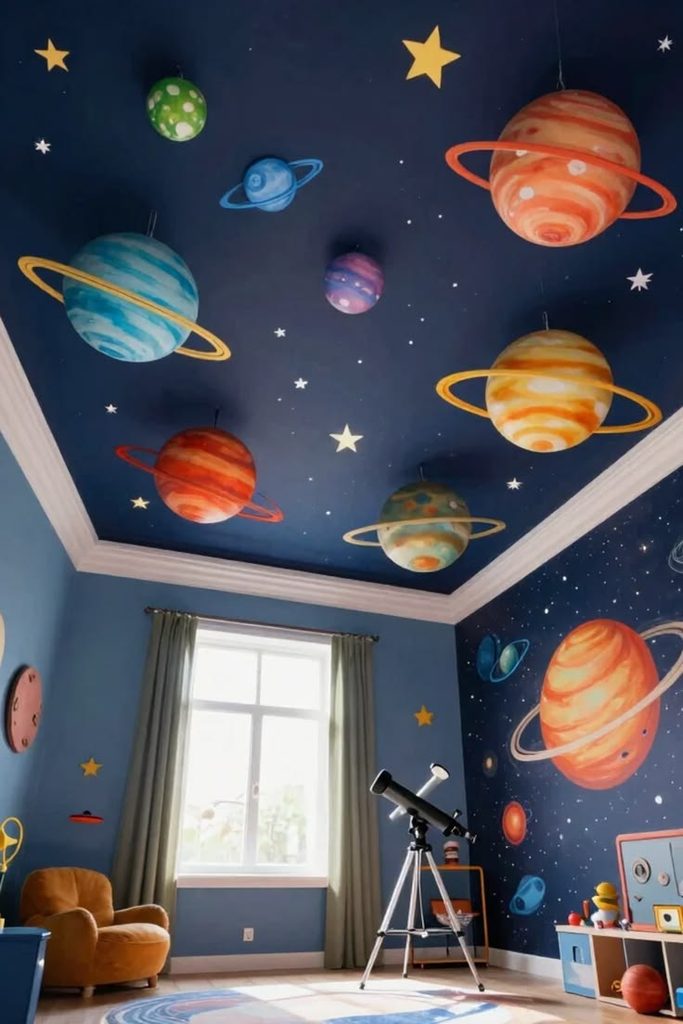
Painting or using decals on the ceiling turns an often-ignored surface into part of the fun. Stars, planets, or clouds give kids something to look at while falling asleep. It’s a small detail that makes a huge difference in how magical the room feels.
Practical tip: Glow-in-the-dark paint on a mural adds a bonus nightlight effect without extra electronics.
This idea suits playful modern and adventure themed rooms best, though a soft cloud ceiling works in almost any style.
19. Add a Personalized Name Sign or Wall Decal
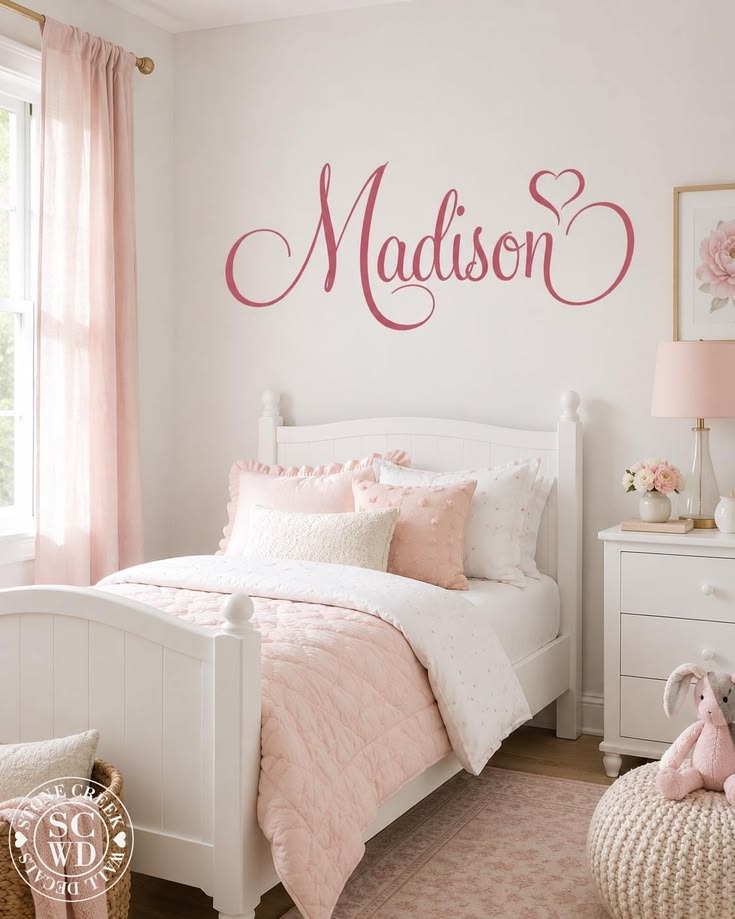
A wooden name sign or a decal above the bed makes the space feel truly theirs. It’s a small touch, but kids notice when their name is part of the room’s design. Choose materials that match the room’s existing wood tones or paint colors.
Practical tip: Hang it slightly higher than eye level so it doesn’t get knocked around during play.
Farmhouse rooms tend to use raw wood letters, while modern rooms prefer clean acrylic or metal versions.
20. Use a Color-Coded Organization System

Assign each type of item a color, blue bins for toys, green for books, yellow for art supplies. It sounds simple, but it makes cleanup nearly automatic once kids learn the system. It also adds a cheerful pop of color without needing to redecorate.
Practical tip: Keep the color system consistent across bins, labels, and even shelf tags for the best results.
This works in literally any style since you’re just choosing bin colors, not changing furniture.
21. Include a Cozy Window Seat

If the room has a window with enough space below it, a built-in or cushioned window seat adds a reading spot and hidden storage underneath. It’s one of those features that feels like a splurge but adds real function.
Practical tip: Use a hinged seat lid for storage access instead of drawers, which saves space in tighter rooms.
Traditional homes often build these in with wood paneling, while coastal rooms keep it simple with a canvas cushion.
Tips for Success
- Involve your kid in at least a few decisions, even something small like picking the rug color, so the room feels like theirs.
- Buy furniture in stages instead of all at once, so you’re not overwhelmed financially or stuck with pieces that don’t fit right.
- Keep a “rotation box” for toys and decor so the room doesn’t feel cluttered with everything out at once.
- Choose washable fabrics and finishes everywhere possible, from curtains to rugs to bedding.
- Leave some wall space empty at first. Kids’ interests shift fast, and you’ll want room to add things later.
- Test paint and wallpaper samples on the actual wall before committing to the whole room.
- Prioritize safety hardware, like anchored furniture and cordless blinds, before focusing on style.
Common Mistakes and How to Avoid Them
Overbuying trendy decor
: Skip character-themed everything. Stick to a few trend pieces that are cheap to swap out, like bedding or a poster, instead of painting a whole room around a phase.
Ignoring growth stages
: Choose furniture and themes that can shift as your kid ages, like a convertible bed or a neutral base color with fun accents layered on top.
Skipping proper storage planning
: Measure your kid’s actual toy and clothing volume before buying storage, not just what looks nice in a showroom.
Forgetting safety anchors
: Always anchor bookshelves, dressers, and TVs to the wall, especially in rooms for kids under seven.
Overcrowding the floor
: Leave a clear, open patch of floor for play. A room packed wall to wall with furniture leaves no space for actual kid activities.
Choosing dark, heavy colors everywhere
: Balance any bold or dark walls with lighter furniture and bedding so the room doesn’t feel small or gloomy.
Similar Variations
- Montessori Kids Room: Low furniture and open floor space designed for independence and easy movement.
- Adventure Themed Room: Maps, compasses, and earthy tones built around exploration and travel.
- Minimalist Kids Room: Fewer items, neutral colors, and a strong focus on function over decoration.
- Whimsical Fairytale Room: Soft pastels, canopy beds, and storybook inspired wall art.
- Sporty Themed Room: Team colors, sports gear display shelves, and durable, active-play-friendly furniture.
- Vintage Nursery Crossover: Antique-style furniture mixed with modern safety features for a timeless look.
Putting a kids room together doesn’t have to feel overwhelming once you break it into small, manageable choices. Start with the basics like the bed and storage, then layer in the fun stuff like lighting, art, and color. Whatever direction you take, these 21 kids bedroom ideas give you a real starting point to build a room your child will actually love and grow into.
Leave a Reply