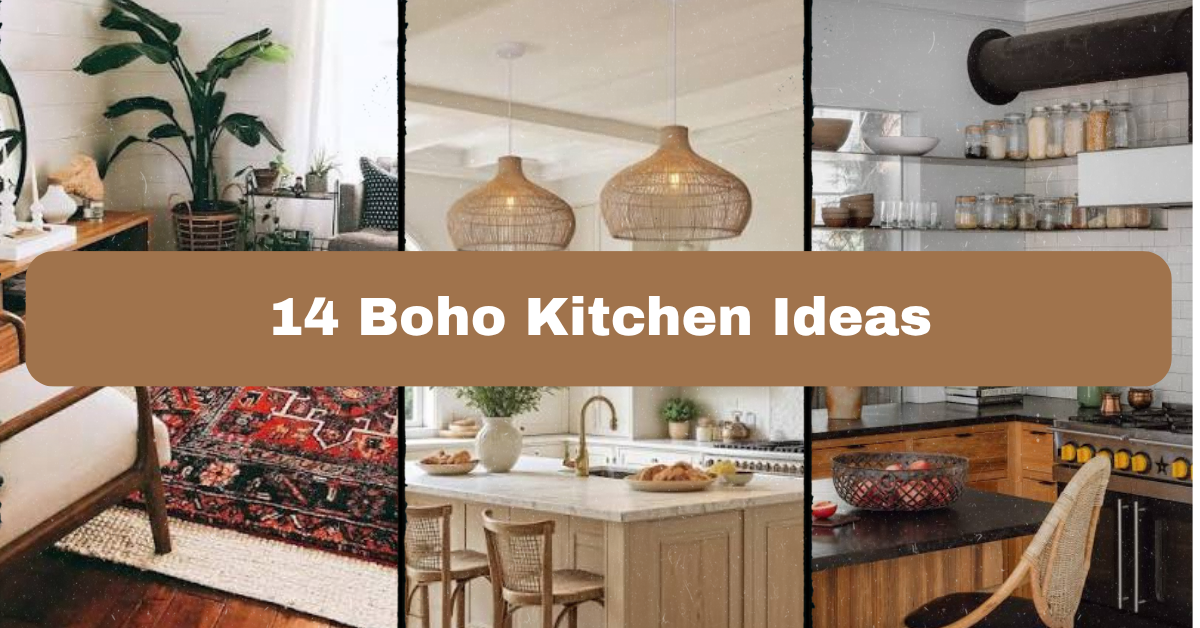
If you’ve been scrolling Pinterest for hours trying to find 14 boho kitchen ideas that actually work in a real home (not just a magazine spread), I’ve got you covered. I’ve pulled together the most practical, doable ideas out there, so you can skip the guesswork and get straight to decorating.
Boho kitchen design blends natural materials, warm colors, and eclectic decor to create a relaxed, personal cooking space. It relies on textures like rattan, wood, and woven fabrics paired with plants, vintage finds, and earthy tones to feel cozy rather than cluttered.
Stick around, because I’m about to walk you through everything from budget-friendly swaps to full kitchen makeovers, plus the mistakes that trip up almost everyone.
What Even Is a Boho Kitchen, Anyway?
Okay, so let’s back up for a second. Boho, short for bohemian, is all about mixing things that shouldn’t work together but somehow do. Think worn leather stools next to a woven pendant light. Or a vintage rug under a sleek marble counter. It’s not messy, though. It’s curated chaos, if that makes sense.
The whole point is to make your kitchen feel like it has a story. Nothing matches perfectly, and that’s the goal. You want warmth, texture, and a little bit of “I found this at a flea market in 2019” energy. It’s forgiving, budget-friendly, and honestly kind of fun to put together once you get the hang of it.
1. Layer a Woven Rug for Warmth
A jute or wool rug under your kitchen table instantly makes the space feel softer. Hard floors in kitchens can feel cold and sterile, so a textured rug breaks that up fast. Go for natural fibers like jute, sisal, or a Moroccan-style wool rug with faded patterns.
Practical tip: choose a low-pile rug so it’s easier to clean up spills and crumbs.
This idea works in almost any style. Coastal kitchens love a light jute weave, while traditional spaces might lean into a Persian-inspired rug with deeper reds and blues.
Once your floor feels grounded, it’s time to think about what’s happening above your head.
2. Hang a Rattan or Wicker Pendant Light
Lighting sets the mood, and boho kitchens thrive on warm, natural glow. Rattan pendant lights cast beautiful shadows on the walls and ceiling, adding texture even when the light’s off. They’re inexpensive too, often under $100, and easy to install if you’re swapping out a boring fixture.
Practical tip: cluster two or three pendants of different sizes over an island for a layered look instead of one big light.
Modern farmhouse kitchens can use a single oversized rattan pendant, while eclectic boho spaces might go with mismatched shapes for more personality. Speaking of islands, let’s talk about what goes on top of them.
3. Add Open Shelving with Mismatched Ceramics
Ditch the matching dish sets. Open shelves lined with mismatched ceramic bowls, vintage plates, and clay mugs give your kitchen that lived-in, collected-over-time feel. It also makes your favorite pieces part of the decor instead of hiding them in a cabinet.
Practical tip: group items by color family, not by set, so the shelf still feels intentional even with mismatched pieces.
Coastal boho kitchens might lean into blues and whites, while desert boho spaces look great with terracotta and cream tones. Now let’s get into color, because that’s where boho really shines.
Boho Kitchen Color Palettes at a Glance
| Palette Name | Main Colors | Best For | Accent Metal |
|---|---|---|---|
| Desert Sunset | Terracotta, cream, rust | Warm, earthy kitchens | Brass |
| Coastal Boho | White, sandy beige, seafoam | Beachy, airy spaces | Brushed gold |
| Jungle Boho | Deep green, mustard, brown | Plant-heavy kitchens | Black iron |
| Neutral Nomad | Ivory, taupe, warm gray | Minimalist boho | Matte gold |
4. Bring in Statement Plants
No boho kitchen is complete without greenery. Trailing plants like pothos or string of pearls look amazing on open shelves or hanging near a window. Bigger plants, like a fiddle leaf fig, work well in corners if you’ve got the floor space.
Practical tip: use terracotta pots since they fit the earthy boho vibe and help wick moisture away from roots.
Modern kitchens can keep plants minimal and structured, maybe just one or two statement pots, while maximalist boho spaces go all in with plants on every surface. Next, let’s talk about what’s covering your windows.
5. Choose Woven Wood Blinds Over Curtains
Woven wood shades bring texture without blocking light completely. They’re a staple in boho design because they filter sunlight in a soft, warm way, unlike stark white blinds. Bamboo, rattan, and jute blinds all work great here.
Practical tip: pick a shade with a slight gap in the weave so light still filters through even when closed.
Traditional kitchens might pair these with fabric curtains for extra softness, while minimalist boho spaces let the blinds stand alone. Now let’s move to something a lot of people overlook: the backsplash.
6. Install a Handmade-Look Tile Backsplash
Zellige tiles, with their irregular edges and glossy, handmade look, are a boho kitchen favorite. The slight imperfections in each tile catch the light differently, giving your backsplash depth that flat, mass-produced tile just can’t match.
Practical tip: if zellige tile is out of budget, look for ceramic tiles that mimic the handmade texture at a fraction of the cost.
Coastal boho kitchens often go with soft blue or seafoam zellige, while desert boho leans toward warm clay tones. Once your walls have texture, your cabinets are the next big canvas.
7. Paint Cabinets in a Warm, Earthy Tone
Skip the all-white kitchen. Boho style loves warm, muted colors like terracotta, olive green, mustard, or warm clay. These colors feel grounded and cozy, especially against natural wood and brass accents.
Practical tip: test paint samples on your actual cabinets and view them in both daylight and evening light before committing.
Modern boho kitchens might stick to one bold color, while eclectic spaces mix two-tone cabinets, like olive on top and natural wood on the bottom. Now that your cabinets have personality, let’s add some hardware to match.
8. Swap in Brass or Unlacquered Metal Hardware
Cabinet hardware is such a small detail, but it makes a huge difference. Brass, aged bronze, or unlacquered brass knobs and pulls add warmth instantly. They also develop a nice patina over time, which only adds to the lived-in boho feel.
Practical tip: mix knob and pull styles slightly, maybe rounded knobs on uppers and long bar pulls on lowers, for subtle variety.
Traditional kitchens might use ornate brass pulls, while modern boho spaces keep it simple with sleek matte black or brushed gold. Let’s talk countertops next, since they need to hold their own visually.
9. Choose Butcher Block or Soapstone Countertops
Wood countertops, especially butcher block, bring warmth and texture that boho kitchens crave. Soapstone is another great option since it has natural veining and a soft, matte finish that feels organic rather than cold like polished marble.
Practical tip: seal butcher block countertops every six months with food-safe mineral oil to keep them from drying out or cracking.
Farmhouse kitchens pair beautifully with butcher block, while modern boho spaces might choose a honed quartz that mimics natural stone. Now, let’s fill your counters with a few personal touches.
Countertop Material Comparison
| Material | Cost per Sq Ft | Maintenance | Boho Vibe Rating |
|---|---|---|---|
| Butcher Block | $35 to $70 | Medium (needs oiling) | High |
| Soapstone | $70 to $120 | Low | High |
| Honed Quartz | $50 to $100 | Very Low | Medium |
| Concrete | $65 to $135 | Medium | Medium-High |
10. Display Woven Baskets for Storage and Texture
Baskets aren’t just for storage, they’re a design element. Stack a few on top of your cabinets, or use smaller ones on open shelves to hold fruit, utensils, or dish towels. The natural fiber texture softens all the hard lines in a kitchen.
Practical tip: use baskets with handles for anything you’ll grab often, like linens or produce.
Coastal kitchens look great with lighter, bleached baskets, while jungle boho spaces might use darker, chunkier woven styles. Let’s talk about a wall feature that ties everything together next.
11. Create a Gallery Wall with Vintage Art and Mirrors
An empty wall is a missed opportunity in a boho kitchen. Mix small vintage paintings, woven wall hangings, and an antique mirror or two for a curated, collected look. It doesn’t need to be symmetrical. In fact, it shouldn’t be.
Practical tip: lay your pieces out on the floor first to plan spacing before hammering a single nail.
Eclectic boho kitchens can go bold with mismatched frames, while minimalist boho spaces might stick to just two or three pieces with breathing room between them. Now, let’s think about the table where you’ll actually sit and eat.
12. Mix Dining Chairs Instead of Matching Them
A matched dining set feels stiff in a boho kitchen. Instead, pick two or three different chair styles, maybe a rattan chair, a wooden bench, and a vintage upholstered seat, and put them around the same table. It looks intentional, not random, when the colors tie together.
Practical tip: keep the wood tones within the same color family even if the chair shapes are different, so the mix still feels cohesive.
Traditional kitchens might mix antique chairs from different eras, while modern boho spaces pair one sleek chair style with a single rattan accent piece. Let’s zoom out and talk textiles next.
13. Layer Textiles on Every Surface You Can
Throw pillows on a kitchen bench, a table runner with fringe, tea towels with tribal prints, these small textile touches add so much personality. Boho design is big on pattern mixing, so don’t be afraid to combine stripes, florals, and geometric prints as long as the color palette stays connected.
Practical tip: stick to two or three colors across all your textiles so the mixed patterns don’t feel chaotic.
Coastal boho leans into striped linen, while desert boho loves Southwestern-inspired prints in rust and cream. Now, let’s finish up with a detail that ties the whole room together.
14. Add Macrame or Woven Wall Hangings
A macrame wall hanging behind your sink or stove adds texture without taking up counter space. These pieces are affordable, easy to make yourself if you’re crafty, and instantly signal “boho” to anyone walking into the room.
Practical tip: hang macrame away from direct grease splatter zones, like above a stove, unless it’s easy to wash.
Minimalist boho spaces might use one small, simple macrame piece, while maximalist kitchens can layer multiple hangings of different sizes. That wraps up our big list, but let’s talk about how to actually pull this off successfully.
Tips for Success
- Start with one or two big changes, like paint or lighting, before adding smaller decor pieces.
- Keep a consistent color thread running through every element, even if textures and patterns vary.
- Shop secondhand stores and flea markets first. Boho thrives on vintage, one-of-a-kind finds.
- Don’t rush the plant situation. Start with one or two low-maintenance varieties and build from there.
- Balance busy elements, like patterned tile, with calmer surfaces, like plain wood cabinets.
- Test hardware finishes on your actual cabinets before buying enough for the whole kitchen.
- Leave some empty space. Boho is layered, not cluttered, and breathing room matters.
Common Mistakes and How to Avoid Them
Overmatching everything
: Boho is about curated mismatch, not a coordinated set. If everything matches too perfectly, it stops feeling boho and starts feeling like a showroom.
Ignoring function for the sake of looks
: A gorgeous woven rug that’s impossible to clean isn’t worth it. Always check maintenance needs before committing to a decor piece in a working kitchen.
Too many colors at once
: Stick to a core palette of three to four colors. Adding a rainbow of shades makes the space feel chaotic instead of cozy.
Skipping texture
: A boho kitchen without texture, like rattan, jute, or woven fabric, ends up looking flat no matter how good the color scheme is.
Forgetting the ceiling and floor
: People decorate walls and counters but forget lighting fixtures and rugs. Those two elements pull a huge amount of visual weight in boho design.
Buying everything new
: Boho loses its charm without a few aged, vintage, or secondhand pieces mixed in. New-only decor can feel flat and impersonal.
Similar Variations
- Desert Boho – warm terracotta tones, cacti, and Southwestern patterns for a sun-baked feel.
- Coastal Boho – light woods, seafoam and sandy tones, plus rattan for a breezy beach house vibe.
- Jungle Boho – deep greens, lots of plants, and dark wood for a lush, tropical feel.
- Modern Boho – clean lines mixed with just a few natural textures for a more streamlined look.
- Vintage Boho – heavy use of antique furniture and thrifted decor for a collected-over-decades feel.
- Scandi Boho – light wood, white walls, and minimal clutter blended with cozy textiles.
Putting together a boho kitchen really comes down to layering textures, sticking to warm earthy colors, and mixing old with new instead of buying a matched set off the shelf. It doesn’t have to happen all at once, either. Start small, maybe with a rug or a pendant light, and build from there as your budget and confidence grow. Whichever direction you take it, these 14 boho kitchen ideas should give you more than enough inspiration to turn your kitchen into a warm, personal space you actually want to spend time in.
Leave a Reply